Inherited Faith (Part I)
I sometimes wonder if my skepticism didn’t begin with religion at all, but with something much smaller- something almost harmless.
I must have been five when I first realized that adults tell lies. Not malicious ones, not the kind meant to harm, but small, playful distortions of reality. My grandmother- “Nana,” in proper Southern fashion- was particularly fond of them. Once, while watching lizards outside, I noticed the strange way their throats stretched out in quick movements. Curious, I asked what that flap of skin was for. Without hesitation, she told me, “That’s their wallet. It’s where they keep their coins.”
I tried to picture it- tiny lizard coins, perhaps stamped with the faces of important lizards. But before my imagination could run too far, I saw the smile creeping across her face. I laughed. It was a lie, but it was a funny one. Still, I filed something away without realizing it: adults were willing to bend reality, even when asked sincere questions.
Not long after, I began attending CCD (or "Confraternity of Christian Doctrine" for non-Catholic readers) every Sunday morning with my older sister. This is where the scale of those “little fibs” seemed to change.
There, I was introduced to Jesus; a kind, soft-spoken figure who looked suspiciously like a hippie and, from what I could tell, performed what could only be described as magic. Water into wine, walking on water, raising the dead. He seemed decent enough, and the adults clearly admired him.
But surrounding his story were others that felt… harder to categorize.
A man building a boat large enough to house a pair of every animal on Earth, polar bears and penguins included. A father-God who flooded the world because he was angry with the people he created. A couple expelled from paradise for eating forbidden fruit. A man that defeated a much larger man with a sling and a rock. An enslaved population that revolted and wandered for 40 years. A man swallowed by a great fish, and then vomited out after 3 days to complete some sort of mission. Whether or not these stories were meant as metaphor, they were presented to us as real events- at least at the level we were taught them, without much emphasis on symbolism or interpretation.
By then, I already knew that adults told lies. The question quietly shifted from do they lie? to what kind of lies are these?
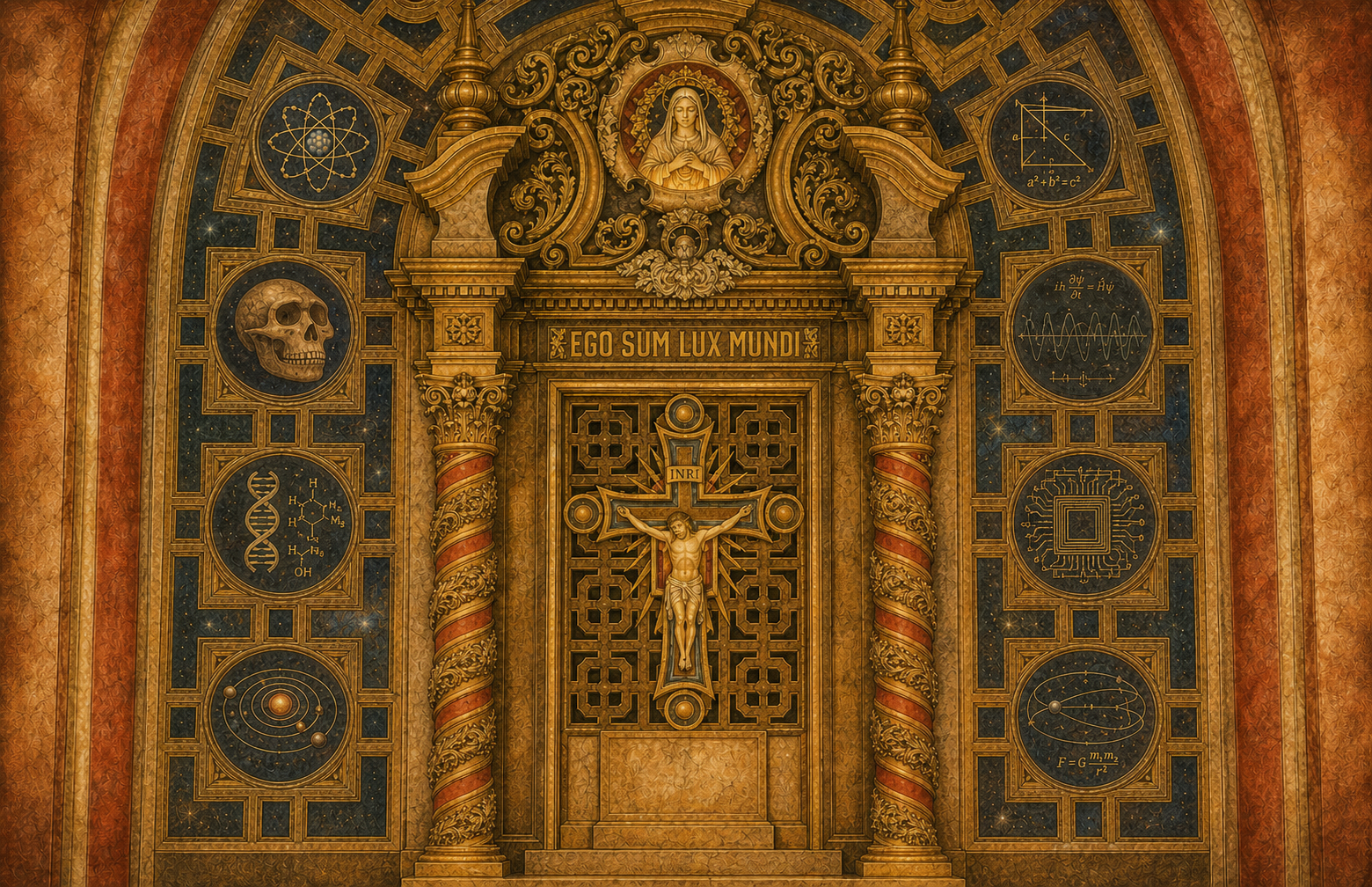
Despite my doubts, I went along with it. I had to. Attendance wasn’t optional, and everything seemed to be building toward something called First Communion- an event my father regarded as deeply important. So I tried, in good faith, to participate. I attempted prayer, mimicking the adults around me, though I suspected I was doing it wrong.
When that didn’t work, I tried something more direct.
If this was "God’s house", as I was told, then surely he might be somewhere inside it. I would scan the highest recesses of the church, half-expecting to see something ancient and imposing- glowing eyes, wild hair and beard, maybe something a little frightening. Given the stories, he didn’t strike me as particularly gentle. But I never saw anything. No movement, no sign. Just architecture and the droning of the priest with an intermittent pipe organ.
My father’s faith- handed down to me, which was handed down to him going back many generations- was on shaky ground.
Eventually, I found ways to cope. I started sneaking comic books or MAD magazines under my shirt and asking if I could sit in the upper balcony during services. From there, I’d read, occasionally glancing up to observe the congregation. Once, a teenager sitting behind me quietly asked to borrow one. It felt like we had formed a small, silent alliance.
My father eventually discovered what I was doing. He warned me that the priests would give me a “dirty look” if they caught me. That bothered me- I didn’t like disappointing authority figures- but not enough to stop. I just got better at hiding it. (This took place in the 1970's and thus long before smartphones. Distraction required effort.)
The services themselves were held in the early evening, and sometimes I’d pretend to fall asleep early, so that I could come out when I knew he had already left. My mother, who I understood to have been raised in a slightly different faith (Methodism), rarely, if ever, attended mass. I didn't get the impression that she judged me for playing hooky, when I emerged from my 'nap' feigning perplexity that my father left without me.
Something else I experienced for the first time and usually occurring on week nights- I had to attend confession, which felt even stranger. Sitting in a dim box, speaking to an unseen adult, under some assumption that one of God's commandments must have been broken already.
At six or seven, I didn’t have much to confess. Once, pressed for something, anything, I admitted that I felt jealous of my friend Jeremy for getting better grades than me. That seemed to satisfy the requirement. I was told to pray the rosary.
I did it, but it felt mechanical and cumbersome. There was no sense of connection- just the growing awareness that I was performing something I didn’t believe, and possibly never will.
Sunday school stretched on like a long, repetitive loop. Even then, I couldn’t shake the feeling that I was trading entire mornings- time that could have been spent exploring, climbing, discovering- for something that felt increasingly hollow.
Eventually, First Communion arrived.
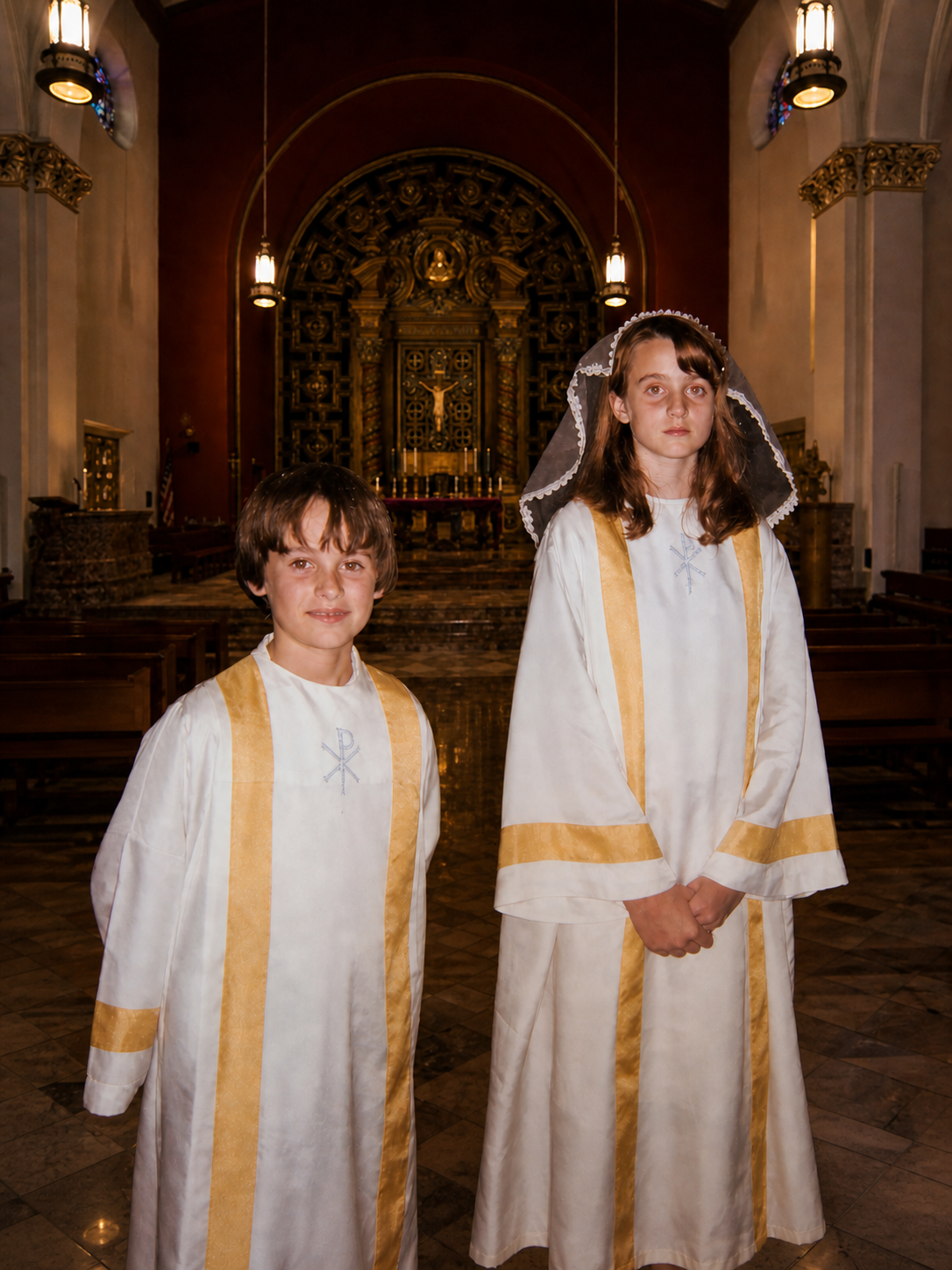
After all that buildup, the reward was a thin, flavorless wafer- closer to cardboard than anything sacred. I could now join the adults in line during mass, though the wine was still off-limits. I remember watching an older kid take a sip from the shared cup and visibly recoil. That didn’t inspire confidence. If anything, I was relieved to delay that particular milestone.
And yet, not everything about the church felt empty.
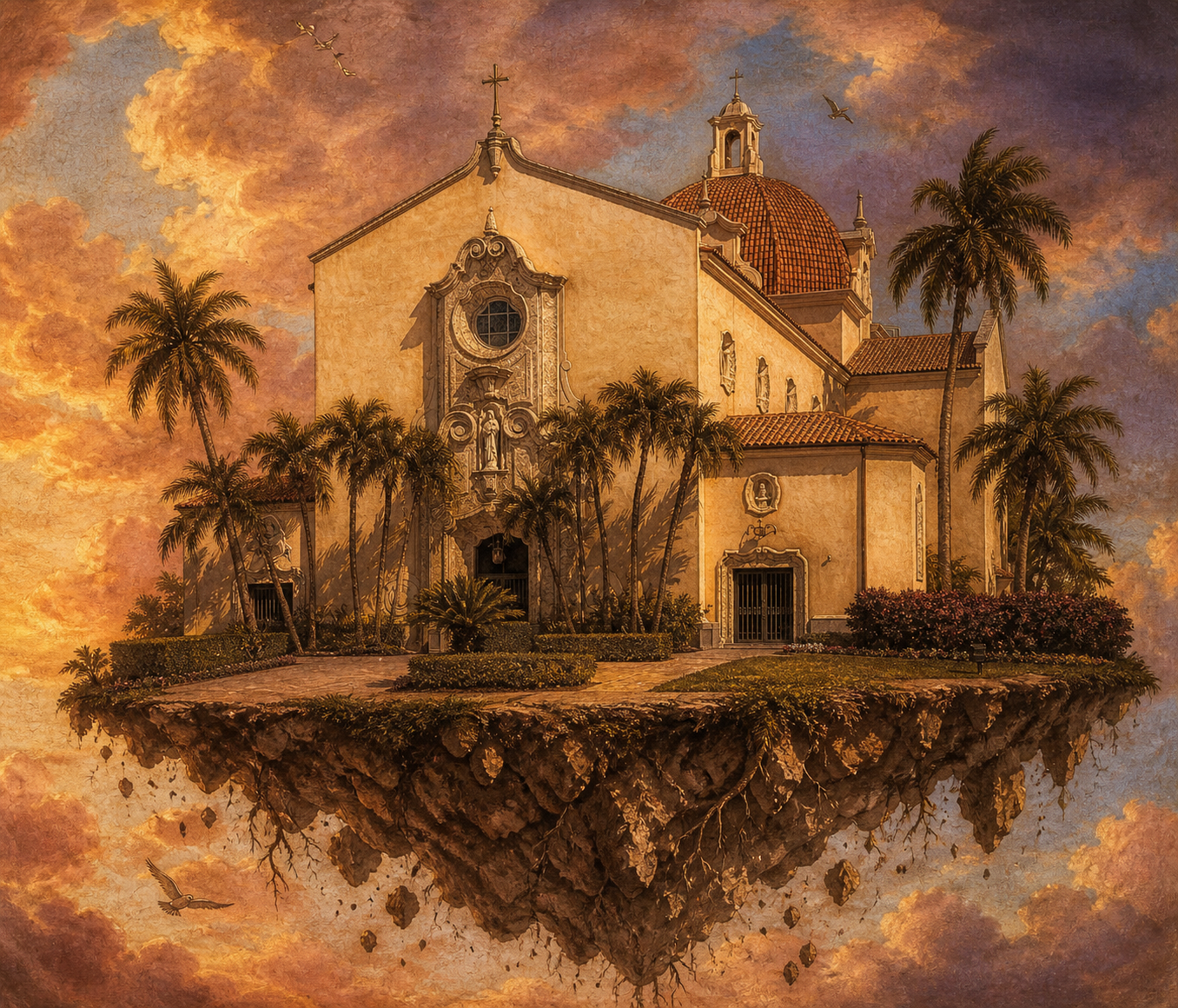
The building itself was beautiful. On the outside, a Spanish-Renaissance style, like many of the "Spanish Colonial Revival" structures found around my birth-city. On the inside, an impressive dome over the alter. Gilded statues and stained glass. Wood that was aged around 50 years at that point. Something about the marble always kept the ambient temperature cold; a welcome respite from the year-round humidity.
I actually enjoyed going there with my father when it was empty. There was something peaceful about it- something separate from the rituals. He would bless himself at the entrance, and I learned to do the same. It made him happy, and that felt real enough.
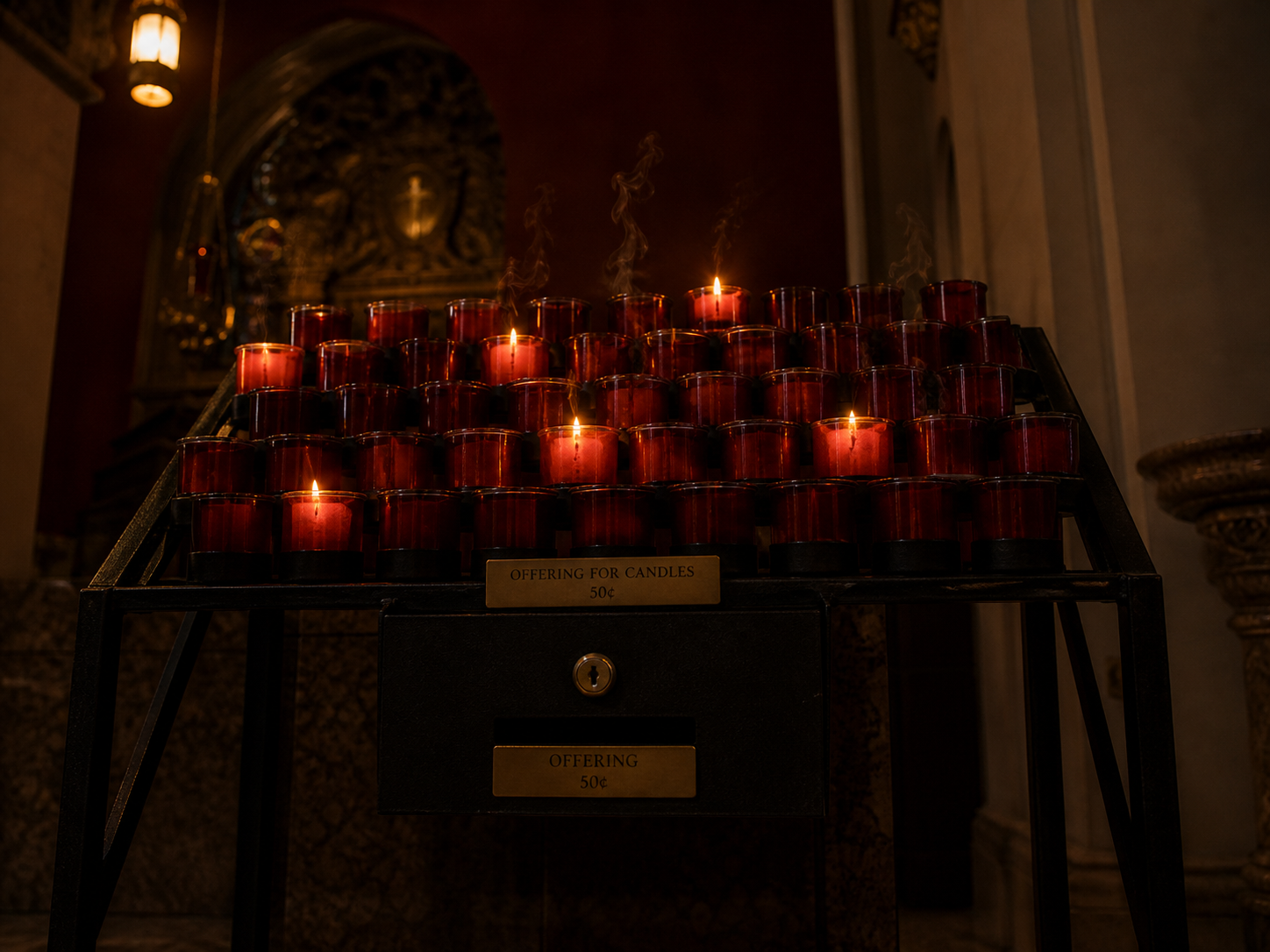
He’d give me a coin to drop into a slot, then let me light a candle using a thin wooden stick. I liked that part- the smell of the burning wood, melting candle wax and the soft glow of the flame behind red glass. We’d kneel together afterward. He would pray. I would slump beside him, breathing in the smoke and appreciating the silence.
In those quiet moments when I was not distracted, I often wondered if God was angry with me for not being a “real” Christian, and whether anyone else carried that same quiet doubt, or if it was mine alone.
My father and sister seemed like true believers, as did his parents, perhaps my mother and her kin did in their own way, and I reasoned the nuns who were teaching me the fundamentals of Christianity and the priests that even my father addressed as "Father" did as well, but I couldn’t grasp what they saw, heard or felt.
I already felt as if I didn’t quite belong.
Comments
Post a Comment